
Learning Space
How children learn here
Our work rests on three foundations: Maria Montessori's understanding of the child, J. Krishnamurti's inquiry into learning and living, and the Nai Taleem of Gandhiji and Vinoba Bhave, where learning grows from the work of the hands and the life of the community. This page describes how that shapes the way children learn here, and what it asks of children, educators and families. For the rhythm of an ordinary day, see A day at the learning space.
The journey of the child
Our framework rests on Maria Montessori's planes of development, adapted to our context and our community.
Two and a half to six years
A young child in a new place asks one question first: "Am I safe here?" Emotional and physical security comes before learning. A calm, predictable room helps the child settle.
Practical work such as pouring, wiping, carrying and watering helps the child gain control of movement, focus the mind and build will. Choosing a piece of work, completing it step by step and putting it back brings order to the child's inner world.
Then come the senses: grading, sorting and naming sizes, shapes, textures, sounds and colours. Language and number follow, first with materials and later on paper. Alongside, lessons in grace and courtesy show the child how to greet, wait, offer help and resolve a conflict with words.
Six years and above
Around six, the child begins to reason, to imagine, and to want to be with friends. The question becomes: "What is my place in this grand story?"
We respond with stories of the universe, of life, of humans, of language and of numbers. They are revisited each year with more depth, and all study grows from them.
Children choose topics to research and present them to their class. They debate, work in groups and make their own agreements. In small groups they go out to a museum, a garden, a river or a local business to find answers the classroom alone cannot give.
Our educators
This way of learning rests on the educators. They prepare the room and the materials, observe each child closely, keep the records, and write each child's progress card from what they have seen.
They also take up the inward work with us. Each week they sit together with their questions: when their own conditioning surfaced, when a child unsettled them, when they reached for control instead of connection. There are no certificates for this work. Yet they show up, week after week, willing to be unsettled and to grow.
Mixed-age classrooms
Children of different ages work in the same room. Younger children watch and learn from older ones. Older children explain what they know, and in doing so understand it better. Each child moves at their own pace, and the educator keeps track of where each one is.
What it asks of us. An educator holds several levels of work in one room at the same time. This needs careful observation and record keeping.
Materials before symbols
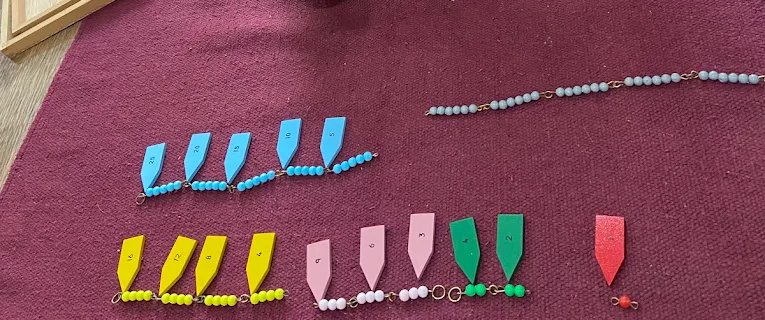
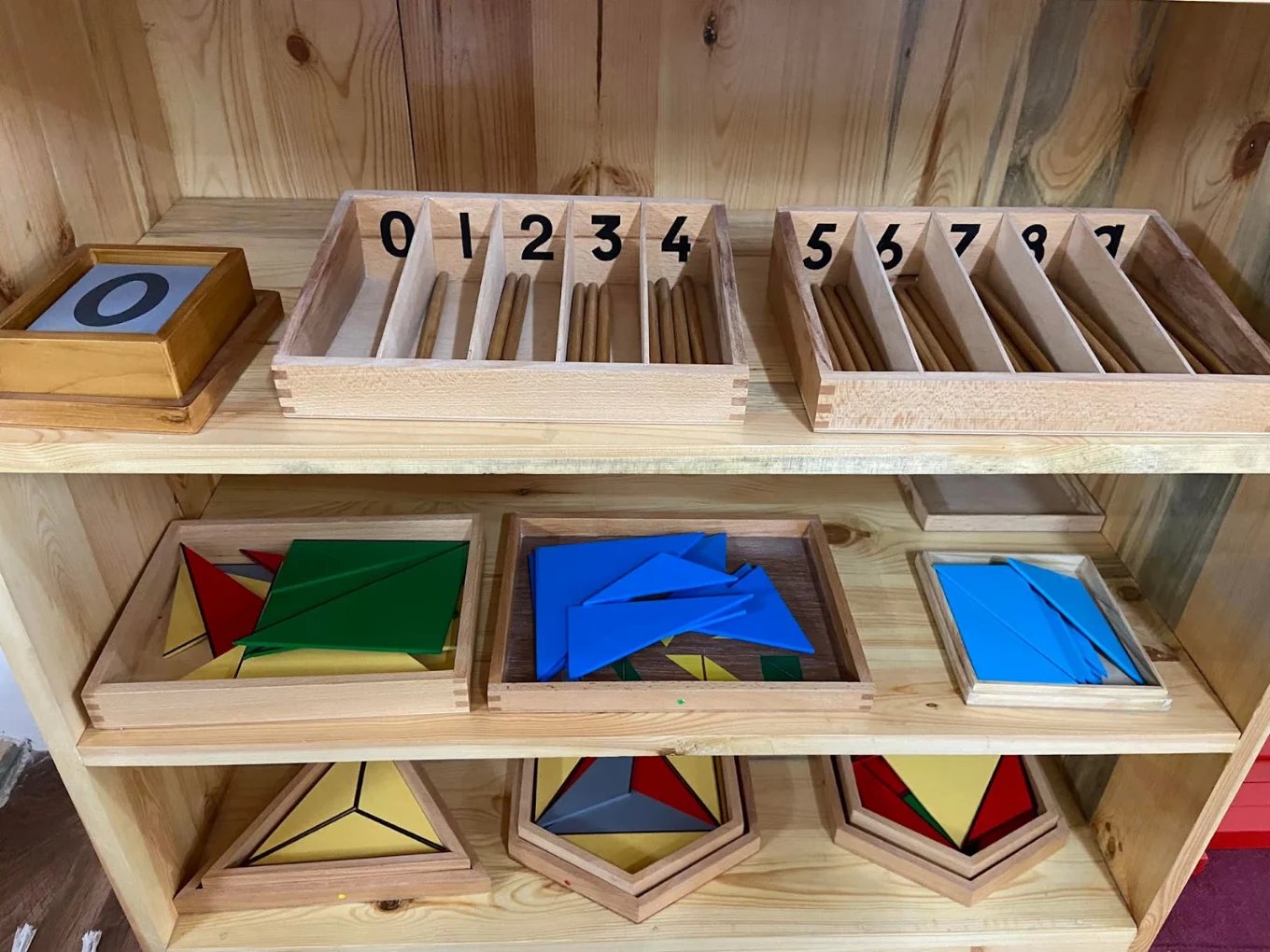
Mathematics starts with things children can hold: pebbles, seeds and other materials. Children group, count, divide and measure with their hands before they write numbers and signs.
Language grows from children's literature and phonics, along with other methods. Children read story books rather than a textbook.
What it asks of families. Concrete work takes time. A child may stay longer with a concept here than a textbook sequence would allow, and families need to be comfortable with that.
Three languages
In the first two to three years, children learn in Marathi, Hindi and English. From the third and fourth year, English is the main language of learning.
Without screens
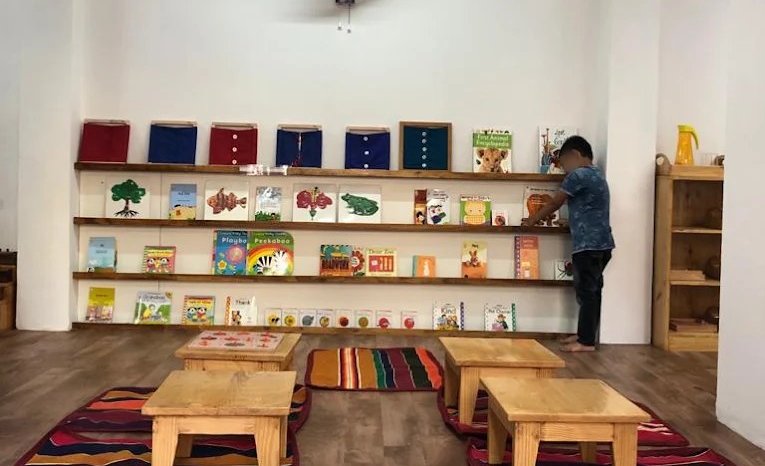
The learning space is screen-free. Children learn from people, materials, books and the world around them.
What it asks of families. We ask families to keep children away from screens at home as well, because what happens at home and at school shapes each other.
Learning from the land and the community
At Radiance, learning grows from the work of the head, heart and hands and from life itself. We cannot rethink education without rethinking how we live: our relationship with the soil, with our environment, with our neighbours, with ourselves and with what we call success.
The land
The Elementary children visited a plot cared for by Sujata and Milind Babar. Once a dumping ground, it is now home to more than a hundred kinds of trees, and more than sixty species of birds visit it. The children learnt that fallen leaves are not dirt but a cover for the soil, that a snake can be a helper, and that nothing in nature goes to waste.
The trees
A lesson on plants grew into a study of food chains and ecosystems, and then into a debate on cutting trees for the Kumbh Mela. It took the children to Tapovan, where they met people who have given their lives to protecting trees, and heard of the 363 Bishnois who gave their lives for them three hundred years ago.
Haat Bazar
Children made and sold ubtan, dant manjan and bookmarks. Working in groups, they bought raw materials, made, labelled, packed and priced their goods, sold them, and kept the accounts.
Progress without exams
There are no exams, marks or ranks. Educators observe each child through the semester and write a progress card of 10 to 12 pages. It covers academic work, thinking, work and discussion habits, art, social life and other areas.
Parents receive a half-semester report midway through each semester. Twice a year, the educator shares the progress card with parents in a meeting. Once parents have read it, we sit down together and talk it through. Parents who choose to work with us on monthly goals also receive a note each month on their child's progress and the goals ahead. Because it is a partnership, it is open to parents who agree to work on those goals at home.
A sample
What a progress card looks like
A made-up card for a child in Grade 3, covering every area we report on, with the educator's note and suggestions for parents.
Moving to another school
Some of our children have moved to schools that follow conventional boards. In our experience they took a few weeks to adjust. If you are thinking about a move later, we are glad to talk through what it might look like for your child.
See what an ordinary day looks like, with photographs from our classrooms.