
Note 2 of 4
Can children learn mathematics and language without textbooks?
A textbook does three jobs. It decides what comes next. It gives the child something to practise. And it shows parents what has been covered.
If a school does not use textbooks, all three jobs still have to be done. The question for a parent is not whether there is a textbook, but who is doing those three jobs, and how.
Who decides what comes next
In our learning space, the sequence lives with the educators. We write our own curriculum for each subject, drawing on Montessori, Nai Taleem and Waldorf, and on what children around us know and see: the river, the trees, the food at home, the city they live in, and so on.
Mathematics: things first, symbols later
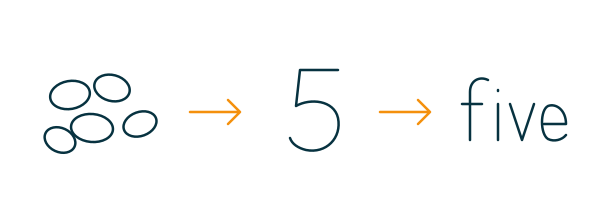
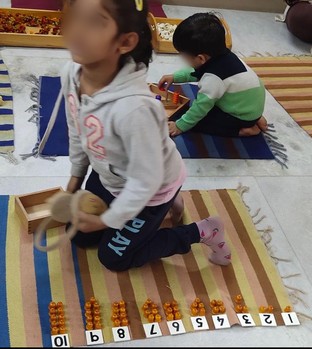
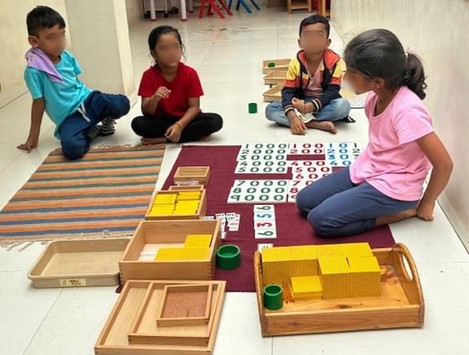
Mathematics starts with things children can hold and feel using their hands and senses. Before a child learns the name and symbol for a number, she learns quantity. When quantity (5 pebbles), symbol (5) and name (five) come together, the child has learnt the number.
Concrete objects are graded, grouped, counted, shared and measured. A child shares twelve beads between three friends before knowing that this is called division or before putting it on paper.
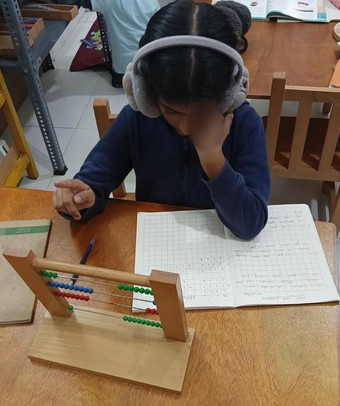
Practice is a part of the day. Children work through problems, write sums and, when the time comes, learn facts by heart.
Language: stories, books, sounds and three languages
Children learn to read through phonics and other methods, alongside children's literature. They borrow from our library and hear stories read aloud.
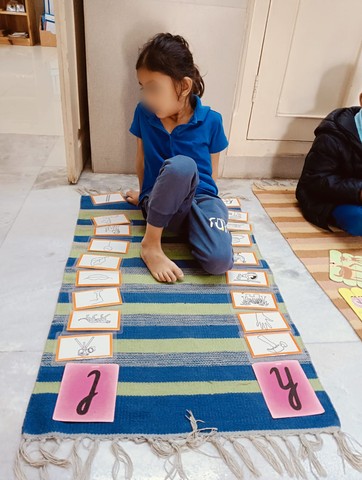
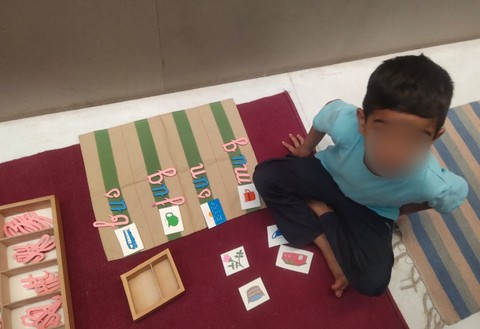
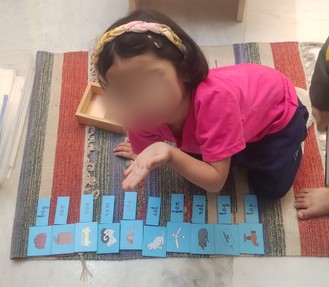
In their first two to three years, children learn in Marathi, Hindi and English. From the third and fourth year, English is the main language of learning.
We do not start writing until the child's hands have gained the necessary strength through working on practical life activities such as pouring, transferring, folding, mopping, cutting, chopping and so on. At the end of their second year or at the beginning of their third year, a child may start writing.
Who shows parents what was covered
A notebook or workbook tells parents what was done in school most easily. Without a book coming home, parents need other ways to see what their child is learning. A child's work is meticulously put together in a folder, and shown to parents at a parent teacher meeting. Parents also receive detailed progress reports through the year, described in the next note.
The limits
Working this way takes more of the educator's time, both in planning and in keeping records. We think it is worth that time.
Monali Lodha, Founder